
Why the ‘Clean 15’ & ‘Dirty Dozen’ matter now more than ever
With the rising cost of living, eating fully organic isn’t realistic for many families. While choosing organic food is ideal, budget constraints often make it impossible to do so across the board. This is where the Clean Fifteen and Dirty Dozen lists become especially valuable, helping you focus your organic spend where it matters most.
Why pesticide exposure matters… especially for children
Children are more vulnerable to pesticide exposure than adults due to their developing organs, nervous systems, and detoxification pathways. Research cited by the American Academy of Pediatrics highlights links between pesticide exposure and increased risks of cancer, behavioural issues, digestive problems, and impaired cognitive development. Babies are even more sensitive, as their ability to process and eliminate toxins is still immature, and pesticide residues can be transferred via breastmilk.
Are pesticides well regulated in Australia?
Australia takes a relatively permissive approach to pesticide regulation. Chemicals are generally approved for use unless there is definitive scientific evidence proving harm, rather than applying a precautionary principle.
Oversight of pesticide use on fruit and vegetables largely falls to industry, and residue testing is often announced in advance. This can limit how accurately testing reflects real-world exposure.
A government residue study completed in 2008 was later contradicted by a follow-up report in 2013, which was not publicly released at the time. Journalists later obtained it through freedom-of-information requests, revealing that some produce, including strawberries, peaches and apricots, contained pesticide levels exceeding safe limits, even for short-term consumption.
As a result, Australians buying conventionally grown produce often have limited certainty about their true pesticide exposure.
What about the UK and Europe?
Pesticide regulation in the UK and Europe is generally stricter than in Australia and the United States, with authorities applying a precautionary approach that can restrict or ban chemicals earlier when safety concerns arise. Routine monitoring and lower maximum residue limits provide greater consumer protection. However, pesticide residues are still commonly detected in certain crops — particularly soft fruits and leafy greens — meaning the principles behind the Clean Fifteen and Dirty Dozen remain relevant as a practical way to prioritise organic choices.
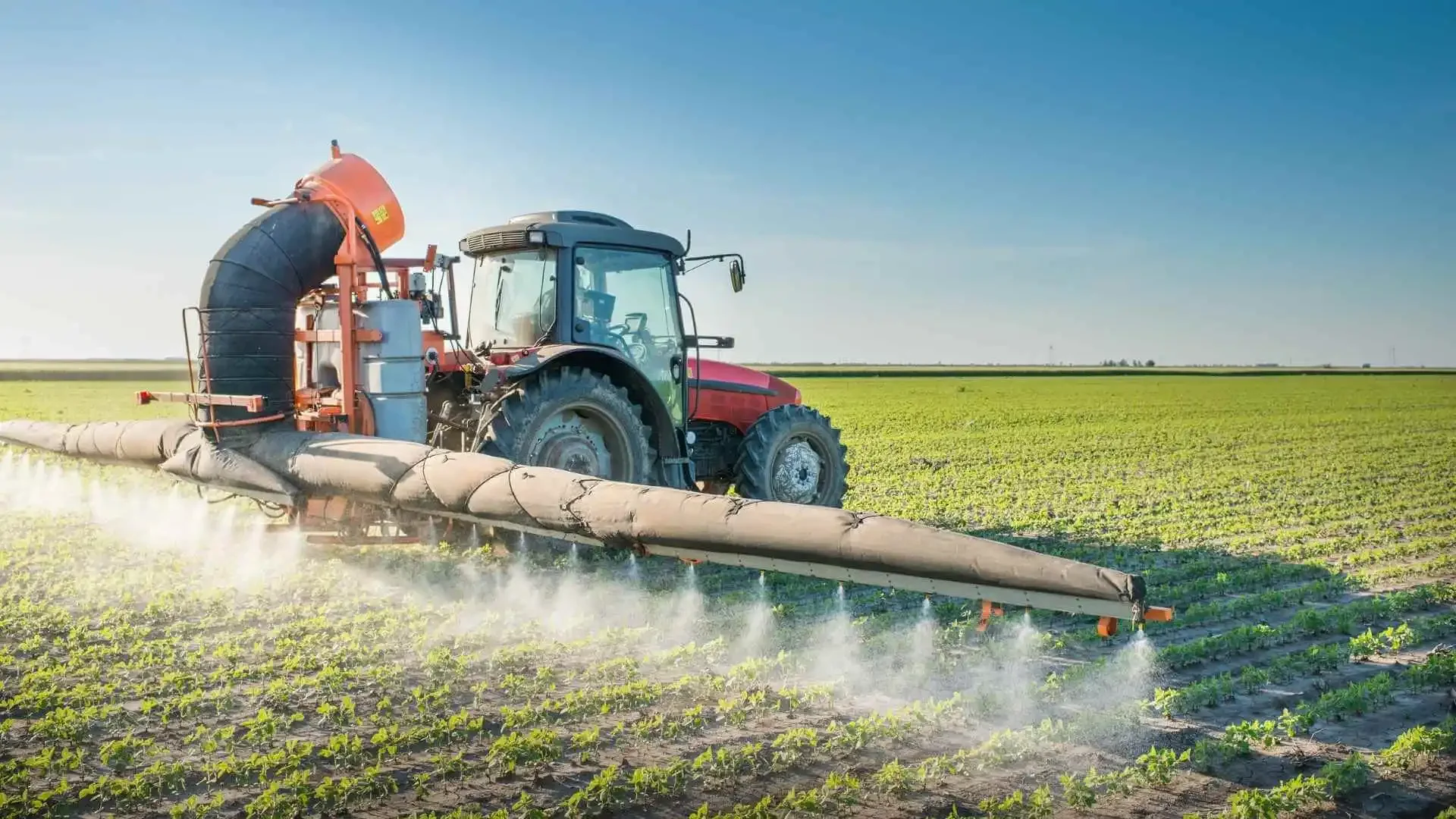
Monocrop pesticide spraying… this is how supermarket produce is grown.
What are the Dirty Dozen and Clean 15?
The Dirty Dozen and Clean Fifteen are annual produce lists created by the Environmental Working Group (EWG). They rank fruits and vegetables based on pesticide residue testing data.
Dirty Dozen: produce most likely to contain higher and multiple pesticide residues
Clean Fifteen: produce that consistently tests lowest for residues
Although Australia does not publish its own official lists, these rankings are widely used here as a practical risk-reduction guide, as the same crops tend to be heavily or lightly sprayed worldwide.
Dirty Dozen (prioritise organic where possible)
Strawberries
Spinach
Kale, collard & mustard greens
Peaches
Pears
Nectarines
Apples
Grapes
Capsicum / bell peppers
Cherries
Blueberries
Green beans
Clean Fifteen (lower priority for organic)
Avocados
Sweet corn
Pineapple
Onions
Papaya
Sweet peas (frozen)
Asparagus
Honeydew melon
Kiwi
Cabbage
Mushrooms
Mango
Sweet potato
Watermelon
Carrots
A simple way to approach it
Produce is most important to buy organic when it is eaten with the skin on or is leafy — such as berries, apples, grapes, spinach and herbs. These foods tend to require heavier pesticide use and retain more residues.
Foods protected by a thick or removable skin, like avocado, mango, onion and melon, typically contain far fewer residues and are lower priority for organic.
Does peeling or cooking help?
Peeling does not fully eliminate pesticide exposure, as many chemicals are absorbed into the flesh of the fruit or vegetable. Peeling also removes valuable nutrients. Cooking can reduce pesticide levels to some extent and may be a helpful strategy when organic options aren’t available.
A more affordable, realistic approach
Rather than striving for perfection, a practical strategy is to base your diet around Clean Fifteen produce and selectively buy organic versions of Dirty Dozen foods. This approach significantly reduces pesticide exposure without dramatically increasing your grocery bill.
Why Farmers’ Markets are a great option
Kids (and adults) love them, and learn how food looks when it’s seasonal and imperfect
You can speak directly with growers about weather, soil and spray practices
Many stalls offer spray-free produce, which is often cheaper than certified organic
Organic certification is costly and time-consuming, meaning some small farms use excellent practices without formal labels